Aerial Training for Every Body: Celebrate Your Unique Strengths and Challenges
Table of Contents
Introduction: A Science-Backed Approach to Aerial Training
Understanding Body Types and Biomechanics
Ectomorphs
Mesomorphs
Endomorphs
Body Type Quiz: Find Your Unique Profile
Joint Considerations in Aerial Training
Hip Flexibility and Strength
Shoulder Stability and Mobility
Core Stability and Strength
Adapting Training to Individual Needs
The Role of Genetics and Sports History
Practical Tips for Long-Term Progress
Conclusion: Training Smarter for Your Body Type
References
Aerial arts are a captivating fusion of strength, flexibility, and artistry. Yet, no two aerialists are the same. Your body type, shaped by genetics, training history, and lifestyle, plays a significant role in how you approach aerial training. These factors influence everything from strength and mobility to injury prevention and recovery. By understanding your unique biomechanics, you can create a training plan that works with your body, not against it. Let’s explore how to adapt aerial practice to your individual needs while celebrating the diversity of body types in the aerial community.
Understanding Body Types and Biomechanics
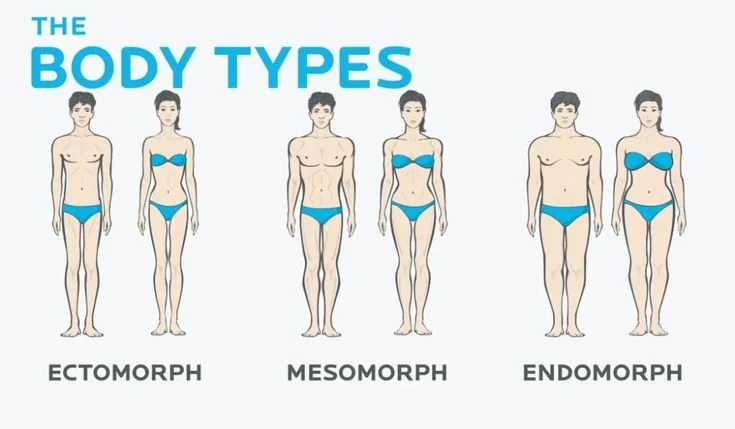
In fitness and movement disciplines, body types are often categorized into three general groups: ectomorphs, mesomorphs, and endomorphs. While these classifications offer a helpful starting point, it’s important to remember that they are not rigid labels. Most people fall somewhere in between these categories, and your body type can evolve with training and lifestyle changes.
1. Ectomorphs
Characteristics: Ectomorphs are typically lean, with long limbs, lower muscle mass, and a fast metabolism.
Training Strengths: Their natural build often lends itself to flexibility-based movements and endurance activities, making them well-suited for graceful aerial flows and dynamic flexibility tricks.
Challenges: Building muscle mass and strength may require more time and effort, which can make strength-based aerial moves, like inversions and dead hangs, more challenging initially.
Training Tips for Ectomorphs:
Progressive Strength Training: Incorporate exercises like pull-ups, resistance band work, and weight training to build muscle density and upper body strength.
Core Stability: Focus on hollow body holds, planks, and hanging leg raises to balance flexibility with strength.
Recovery Protocols: Ectomorphs may experience more bruising or soreness due to lower body fat. Prioritize recovery methods like foam rolling, myofascial release, and active recovery days to prevent overtraining.
Nutrition: Ensure you’re consuming enough calories and protein to support muscle growth and recovery.
2. Mesomorphs
Characteristics: Mesomorphs are naturally muscular and athletic, with a balanced frame that supports both strength and endurance.
Training Strengths: Their ability to build muscle quickly makes them excel at strength-based aerial movements like inversions, holds, and dynamic tricks.
Challenges: Flexibility may require more consistent effort, and mesomorphs may need to focus on mobility to maintain balance in their training.
Training Tips for Mesomorphs:
Prioritize Flexibility: Incorporate regular stretching sessions, focusing on both static and dynamic stretches. Active flexibility drills, like leg swings and resisted stretches, can help improve mobility.
Mobility Work: Target areas like the shoulders, hips, and spine with exercises like wall angels, shoulder dislocates, and hip openers to enhance range of motion for complex tricks.
Strength Maintenance: Leverage your natural strength with high-intensity exercises like deadlifts, pull-ups, and weighted conditioning. Balance these with mobility work to avoid over-tightness.
Mindful Rest: Mesomorphs often have the capacity for high-intensity training but should still incorporate rest days to prevent overuse injuries.
3. Endomorphs
Characteristics: Endomorphs typically have broader frames, higher body fat percentages, and an ability to build muscle efficiently.
Training Strengths: Their natural strength makes them powerful aerialists, excelling in strength-based movements like inversions, holds, and static poses.
Challenges: Endurance and flexibility may require more focused training to balance their natural power.
Training Tips for Endomorphs:
Build Endurance: Use interval-based conditioning and aerial sequences to improve stamina. High-rep circuits and controlled aerial flows are particularly effective.
Flexibility Focus: Daily stretching and mobility work, especially for the hips, shoulders, and lower back, can help improve range of motion for poses and transitions.
Balanced Workouts: Combine strength and cardio exercises, such as high-intensity interval training (HIIT) paired with aerial conditioning, to optimize performance and body composition.
Celebrate Strength: Embrace your natural power and use it to your advantage in strength-based tricks while gradually building endurance and mobility.
Body Type Quiz: Find Your Unique Profile
Understanding your body type can help you tailor your aerial training to your unique strengths and areas for improvement. This quiz is designed to guide you, but remember—most people fall somewhere between categories, and your body type can evolve with training and lifestyle changes.
For each question, rate yourself on a scale of 1 to 5, where:
1 = Rarely true for me
5 = Always true for me
1. Muscle Mass and Build
I naturally have a lean, slim build and struggle to gain muscle.
I have a naturally muscular and athletic build.
I have a broader frame and gain muscle easily.
2. Flexibility
I find it easy to perform flexibility-based movements like splits or backbends.
I have moderate flexibility, but it requires consistent effort to maintain.
I struggle with flexibility and need to work on it regularly.
3. Strength
I find it challenging to build upper body and core strength.
I build strength quickly and excel at strength-based movements.
I have natural strength but may struggle with endurance.
4. Endurance
I can sustain long workouts or conditioning sessions with ease.
I have a balance of endurance and strength, depending on the activity.
I often find endurance-based activities more challenging than strength-based ones.
5. Metabolism
I have a fast metabolism and find it hard to gain weight or muscle mass.
My metabolism feels balanced, and I can maintain my weight easily.
I have a slower metabolism and tend to gain weight more easily.
How to Interpret Your Results
Mostly 1s and 2s: You may lean towards an Ectomorph body type. Focus on building strength and muscle density while leveraging your natural flexibility and endurance.
Mostly 3s: You may align with a Mesomorph body type. Use your natural strength to your advantage while prioritizing flexibility and mobility to balance your training.
Mostly 4s and 5s: You may identify with an Endomorph body type. Embrace your natural strength and focus on endurance-building activities and flexibility work for a well-rounded practice.
A Mix of Scores: If your results are varied, you likely fall somewhere between categories. This is perfectly normal! Tailor your training to address specific needs, whether it’s strength, flexibility, or endurance.
Joint Considerations in Aerial Training
Your body’s unique biomechanics also influence how your joints handle stress during aerial practice. Understanding these differences allows you to protect your joints and optimize performance.
1. Hip Flexibility and Strength
Key Moves Affected: Straddle inverts, splits, hip hangs.
Adaptations: Incorporate hip-opening stretches like lunges, pigeon pose, and dynamic hip circles. Strengthen stability with exercises like leg raises, banded side-steps, and hip thrusts.
2. Shoulder Stability and Mobility
Key Moves Affected: Shoulder mounts, inversions, and hanging holds.
Adaptations: Hypermobile aerialists should focus on stability exercises (e.g., scapular push-ups), while those with tighter shoulders can benefit from mobility drills like wall angels and shoulder dislocates.
3. Core Stability and Strength
Key Moves Affected: Inversions, drops, and holds.
Adaptations: Core exercises like hollow body holds and planks are essential for all aerialists. Advanced practitioners can include end-range conditioning to build strength in deep flexion or extension.
Adapting Training to Individual Needs
The Role of Genetics and Sports History
Your body type is influenced by genetics, but your training history and lifestyle also play a significant role. For example, a background in swimming may have developed your shoulder strength, while a history in dance could contribute to natural flexibility. Recognizing these factors allows you to build on existing strengths while addressing areas that need improvement.
Practical Tips for Long-Term Progress
Get a Movement Assessment: Work with a coach to evaluate your mobility, strength, and flexibility. This helps identify areas that need the most attention and ensures your training plan is tailored to your needs.
Set Realistic Goals: Break down your big aerial dreams into actionable steps. Focus on incremental progress, whether it’s mastering a new trick or improving your endurance.
Use a Balanced Training Plan: Incorporate a mix of strength, flexibility, and endurance work. Avoid overemphasizing one area to ensure well-rounded development.
Track Your Progress: Keep a training journal or use an app to log your workouts. This helps you stay consistent and celebrate small wins along the way.
Listen to Your Body: Rest and recovery are just as important as training. Pay attention to signs of fatigue or overtraining and adjust your schedule accordingly.
Elevate Your Aerial Training Today!
Join the Aerial Performance Lab (APL) and access structured, expert-designed programs that help you build strength, master flexibility, and prevent injuries—all while progressing at your own pace.
💡 What’s Included?
✔️ Monthly content updates to keep your training fresh
✔️ Live classes, Q&A sessions, and a supportive community
✔️ Personalized onboarding to help you get started
🎯 7-Day Free Trial – Discover smarter, science-backed training risk-free!
👉 Take the leap and transform your aerial journey. Join APL Now!
Conclusion: Training Smarter for Your Body Type
Your body is uniquely yours, and understanding its biomechanics can help you train smarter, not harder. Whether you’re naturally flexible, strong, or somewhere in between, a balanced approach to aerial training will enhance your performance while reducing the risk of injury. Celebrate your individuality, seek guidance from coaches, and remember that there’s no one-size-fits-all path to aerial success.
Stay tuned for more training resources and expert-led programs designed to help you adapt your practice to your unique body type and goals!
References:
Somatotype Theory (Ectomorph, Mesomorph, Endomorph):
Carter, J. E. L., & Heath, B. H. (1990). Somatotyping: Development and Applications. Cambridge University Press.
This book offers a comprehensive look into somatotyping, which categorizes different body types and their physiological traits.Biomechanics of Strength and Flexibility:
McGill, S. (2016). Ultimate Back Fitness and Performance. Backfitpro.
McGill provides detailed insights into how different body types and structural variations affect strength and flexibility in movement disciplines.Shoulder Health and Mobility for Aerialists:
Wilk, K. E., Reinold, M. M., & Andrews, J. R. (2009). Shoulder injuries in overhead athletes. Journal of Orthopaedic & Sports Physical Therapy, 39(2), 38-54.
This paper explores the biomechanics of the shoulder and provides exercises to enhance stability and mobility, which are crucial for aerialists.Core Strength and Stability in Athletic Performance:
Kibler, W. B., Press, J., & Sciascia, A. (2006). The role of core stability in athletic function. Sports Medicine, 36(3), 189-198.
This research emphasizes the importance of core stability in sports and how it contributes to injury prevention and performance, making it relevant for aerialists.5- End-Range Conditioning for Flexibility:
Behm, D. G., & Chaouachi, A. (2011). A review of the acute effects of static and dynamic stretching on performance. European Journal of Applied Physiology, 111(11), 2633-2651.
This paper discusses the role of dynamic flexibility and strength at the end range of motion, a concept critical for advanced aerialists.