Master Your Aerial Practice: Core Strength Training for Aerialists
Core strength is the unsung hero of every aerialist’s journey. Whether you're just beginning to explore the magic of aerial silks or you're a seasoned performer mastering intricate transitions on the hoop, your core is the powerhouse behind every movement. It’s what keeps you balanced, graceful, and safe as you defy gravity.
By incorporating targeted aerial conditioning exercises at home or in the studio, you can enhance your stability, endurance, and overall performance. In this guide, we’ll dive into the importance of core strength for aerialists, explore the essential muscles that make up your core, and share practical tips to help you build a rock-solid foundation. Plus, we’ll show you how to create consistency in your core training for long-term success.
Table of Contents
Why Core Strength is Crucial for Aerialists
Top Core Conditioning Exercises for Aerialists
Building Consistency in Core Training
Avoiding Imbalances: Why Variety Matters
The Aerial Performance Lab: Your Partner in Progress
Conclusion
Why Core Strength is Crucial for Aerialists
The Science Behind Core Strength
Your core is more than just those visible six-pack muscles. It’s a complex system of multiple layers working together to provide stability, control, and power. For aerialists, a strong core is essential for maintaining balance on aerial silks, executing seamless transitions on the hoop, and performing dynamic tricks with precision. It also plays a critical role in injury prevention, as it stabilizes your spine and supports efficient movement.
Layers of the Core
Understanding the anatomy of your core helps you train smarter. Here’s a breakdown of the key muscles that aerialists rely on:
Rectus Abdominis: The “six-pack” muscle helps with flexing the spine and is essential for pikes and inversions.
Obliques: Located on the sides of your abdomen, these muscles assist with twisting and side-bending, crucial for aerial rotations.
Transverse Abdominis: The deepest abdominal muscle acts like a corset, stabilizing your spine and protecting your lower back.
Multifidus: Small but mighty muscles along the spine that aid in vertebral stability.
Serratus Anterior: Found on the sides of the chest, these muscles are vital for shoulder blade movement and arm elevation.
Hip Flexors: Including the psoas major and iliacus, these muscles connect the spine and pelvis to the legs, playing a key role in leg lifts and maintaining hip stability.
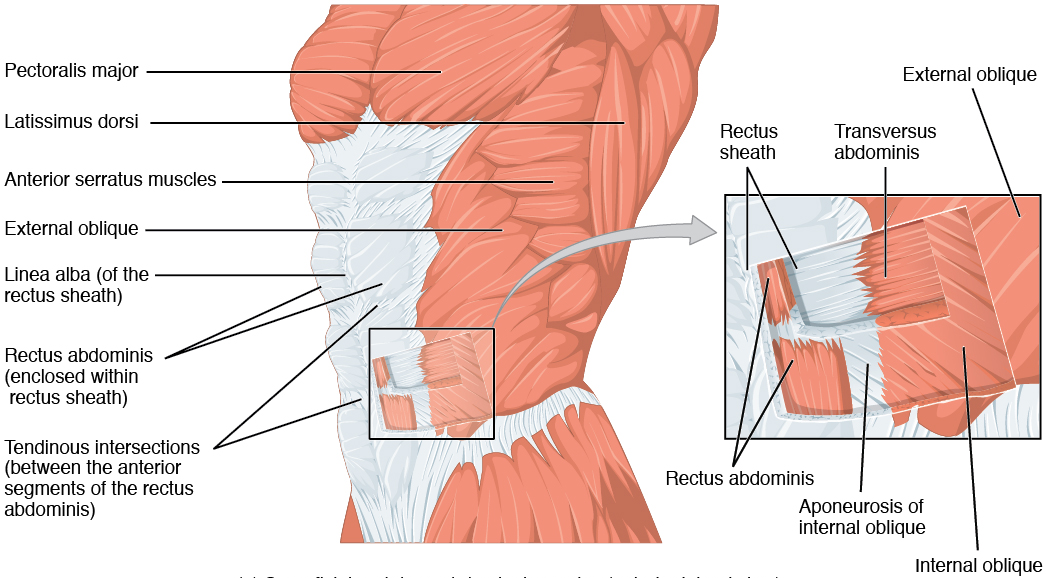
The layers of the core are a lot more complex than we can imagine.
Top Core Conditioning Exercises for Aerialists
To truly elevate your aerial practice, your workouts should target all layers of the core. Here’s how to approach core conditioning effectively:
1. Transverse Abdominis Activation
Planks: Hold for 30–60 seconds, focusing on a straight line from head to heels.
Hollow Body Holds: Engage your entire core by lifting your arms and legs off the ground while keeping your lower back pressed into the floor.
2. Oblique Engagement
Side Planks: Build lateral core strength for twisting movements.
Russian Twists: Improve rotational power for dynamic aerial transitions.
3. Hip Flexor Strength
Hanging Leg Raises: Target the hip flexors and lower abs for controlled leg lifts.
Mountain Climbers: Add a cardio element while challenging your core stability.
4. Serratus Anterior Activation
Scapular Push-Ups: Strengthen your shoulders and improve upper body stability.
5. Full-Core Workouts
V-Ups: Mimic aerial pike positions to build strength for tricks.
Superman Holds: Strengthen your lower back for a balanced core.
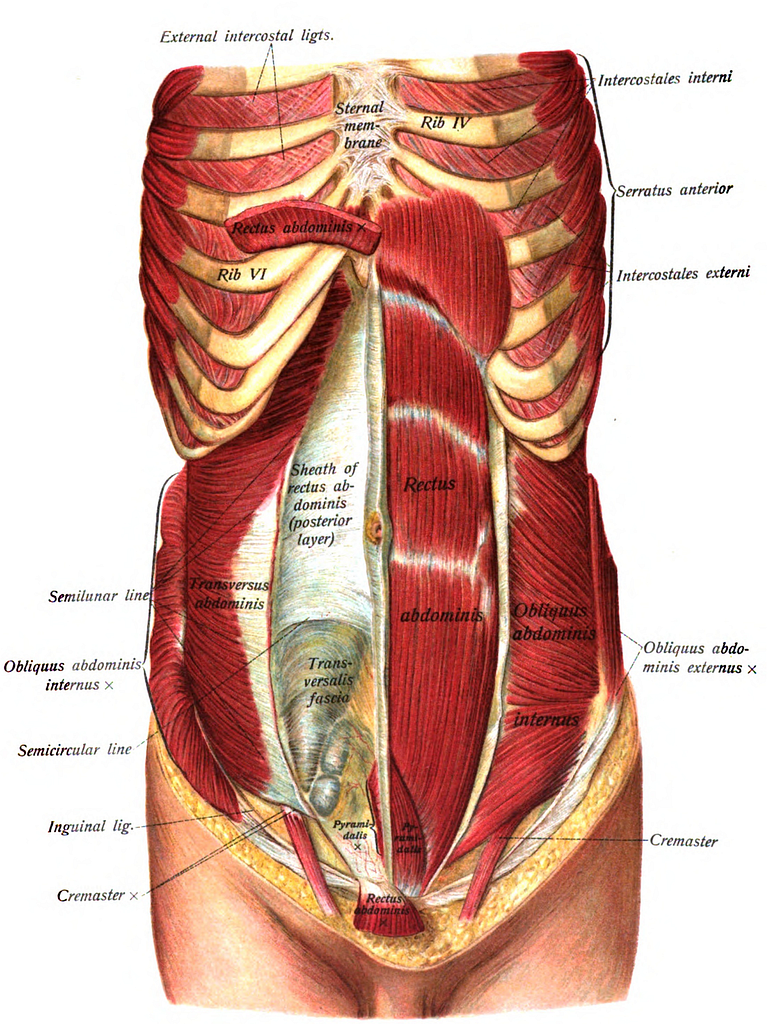
Understanding the relationship of your core muscles can help you harness your aerial progress more effectively.
Building Consistency in Core Training
Consistency is the key to long-term progress and success in aerial practice. Here’s how to make core training a sustainable part of your routine:
1. Set Clear Goals
Define short-term and long-term goals to stay motivated. For example:
Short-Term Goal: Hold a plank for 60 seconds without breaking form.
Long-Term Goal: Perform straddle inversions with ease.
2. Create a Realistic Schedule
Make core training manageable by scheduling shorter, focused sessions:
Daily Core Work: Dedicate 10–15 minutes to planks, hollow body holds, or V-ups.
Core Days: Set aside 2–3 days a week for longer sessions that target multiple muscle groups.
3. Use Habit-Stacking
Pair core training with existing habits. For example:
Do a plank right after brushing your teeth.
Practice hollow body holds before your aerial warm-up.
4. Track Your Progress
Use a journal or app to log your reps, sets, and hold times. Tracking helps you see improvements over time and keeps you accountable.
5. Prioritize Recovery
Avoid overtraining by scheduling rest days and incorporating active recovery, like yoga or light stretching. This ensures your core muscles have time to repair and grow stronger.
Avoiding Imbalances: Why Variety Matters
Aerial arts demand a wide range of movements, which means your core training should reflect that diversity. Repeating the same exercises can lead to muscle imbalances and overuse injuries. Instead, mix it up with cross-training activities like Yoga, Pilates, or functional strength training. These disciplines not only strengthen your core but also improve flexibility, alignment, and body awareness.
For example:
Yoga enhances mindfulness and balance, helping you flow through transitions with grace.
Pilates focuses on precise, controlled movements that build core stability and endurance.
Functional Training improves overall strength and mimics the dynamic demands of aerial arts.
The Aerial Performance Lab: Your Partner in Progress
Ready to take your aerial practice to the next level? The Aerial Performance Lab (APL) is here to support you.
Designed specifically for aerialists, APL offers personalized programs that focus on strength, flexibility, recovery, and skill-specific training. Whether you’re training at home or in the studio, APL provides the tools you need to progress safely and sustainably.
With features like live online classes, expert tutorials, and a supportive community of aerialists, APL ensures you’re never training alone. Plus, our 7-day free trial lets you explore everything we offer risk-free.
Conclusion
Core strength is your foundation for success as an aerialist. By targeting essential muscles, incorporating variety into your workouts, and staying consistent, you’ll not only improve your performance but also reduce the risk of injury. Remember, a strong core isn’t just about aesthetics—it’s about control, confidence, and longevity in your aerial journey.
So, what are you waiting for? Start building your core strength today, and watch your aerial practice soar to new heights. As we like to say at APL, “The sky isn’t the limit—it’s just the beginning!”
References
Borghuis, J., et al. (2008). "The Importance of Core Stability in Athletic Function". Sports Medicine, 38(11), 995-1008. [Explores the role of core strength in athletic performance and injury prevention.]
Hibbs, A., et al. (2008). "The Contribution of the Trunk Muscles to Stability and Balance". Journal of Strength and Conditioning Research, 22(5), 1333-1341. [Examines how core muscles contribute to stability.]
Marshall, P.W., & Murphy, B.A. (2005). "Core Stability Exercises in Static and Dynamic Conditions". Journal of Sports Sciences, 23(7), 659-665. [Investigates the effectiveness of different core exercises.]
Willardson, J.M. (2007). "Core Stability Training: Applications to Sports Conditioning Programs". Journal of Strength and Conditioning Research, 21(3), 979-985. [Discusses specific core training techniques.]
Meeusen, R., et al. (2013). Prevention, diagnosis, and treatment of the overtraining syndrome. European Journal of Sport Science, 13(1), 1–24.
Bompa, T., & Buzzichelli, C. (2015). Periodization Training for Sports. Human Kinetics.
Zatsiorsky, V. M., & Kraemer, W. J. (2006). Science and Practice of Strength Training. Human Kinetics.